Emily Daglish
December 3, 2014
Latest Articles, The Policy Unit
We are guilty, notably in the developed world, of focusing our attention on issues we deem of immediate importance at the expense of long term intractable conflicts. However, what we continuously fail to recognise is how those issues we have never prioritised, and those we long ago forgot, continue to drastically shape our economic stability and security.
Read More »
Jacob Sharpe
December 2, 2014
Latest Articles, The Policy Unit
As potential contacts are monitored in places such as the United States and Spain, the sickness is very suddenly falling off the political radar. But West Africa still faces a multitude of challenges and infections, and the West must take this opportunity to be better prepared for future outbreaks.
Read More »
Daniel Curwin and Emily Daglish
November 26, 2014
Latest Articles, The Policy Unit
The latter half of the 20th century, despite being mired in the depths of the Cold War, was a period in which human technological advancements dramatically increased the standard of living for countless individuals around the globe. The drastic acceleration of global industrialisation during this period has been fuelled by natural resource development, often occurring in some of the world’s poorest states. The pursuit of wealth generated from resource development essential for our modern conveniences has significantly contributed to conflict in many regions, several of which are ecologically sensitive areas.
Read More »
admin
November 19, 2014
HSC in the Media, Latest Articles
Julie Lenarz, the Executive Director of the Human Security Centre, reacts to yesterday’s terrorist attack on a synagogue in Jerusalem. What happened in Jerusalem yesterday was a crime of unspeakable cruelty and barbarous depravity. It was not just a normal terrorist ...
Read More »
Carolina Rocha da Silva
November 14, 2014
Latest Articles
Early marriage disproportionally affects girls in greater number and with more intensity than boys. UNICEF estimates that in 2013, 730 million girls were married before the age of 18 while only 156 million boys were married before reaching adulthood[ii]. Therefore, this article will mainly focus on female victims of child marriage.
Read More »
Rowan Allport
November 11, 2014
Latest Articles, Security and Defence
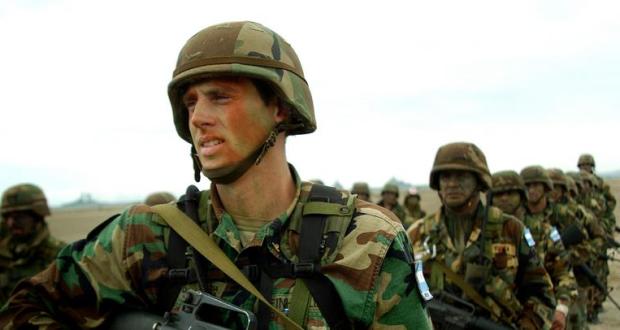
Decades of national economic mismanagement have combined with a lingering mistrust of the military by both the public and political class to leave the Argentine Armed Forces underfunded, underequipped and unready for war. It seems likely the country’s military will have to come to terms with the fact that their fall from grace is a permanent arrangement.
Read More »
Ielizaveta Rekhtman
November 11, 2014
Latest Articles, The Policy Unit
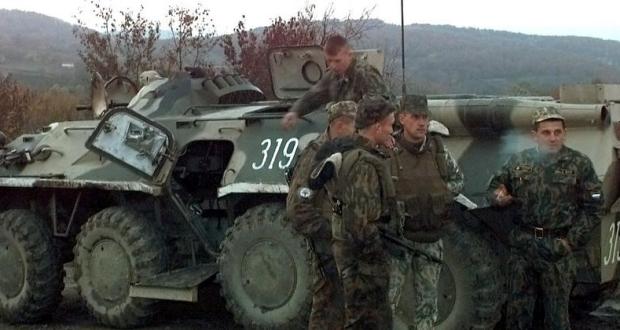
In the light of the Ukrainian crisis and its implications for global political actors, Ukraine’s internal balance of political power has been increasingly topical for Western and Russian analysts. From the Western and Russian perspectives, the Ukrainian crisis is a foreign policy issue with serious, but yet controllable, consequences. For Ukraine, the mounting external involvement has an impact on its internal matters that is hard to measure or control.
Read More »
Stina Hartikainen
October 28, 2014
Europe, Latest Articles, The Policy Unit
On 3 October 2013 a boat carrying over 500 migrants from Eritrea and Somalia sunk off the coast of the Italian island of Lampedusa, leading to the deaths of over 350 people; a few days later, a second incident occurred adding at least another 34 lives to the death toll. Following the tragedy of Lampedusa, the EU and its member states pledged that an end must come to migrant deaths in the Mediterranean, with the EU Parliament calling the incidents a turning point towards a new policy guided by ‘solidarity and responsibility’.[1] One year on, the pledge echoes hollow as new reports of incidents across the Mediterranean surface weekly.
Read More »
admin
October 27, 2014
Latest Articles, Press Releases
Yesterday marked the end of combat operations in Afghanistan for the British armed forces. Over 13 years of conflict have ensued since the US invoked Article 5 of the Washington Treaty in the wake of the 9/11 terrorist attacks. Afghanistan ...
Read More »
Andrada Filip
October 23, 2014
Iraq and Syria, Latest Articles, Middle East and North Africa
On the 21st of August 2013, the biggest chemical weapon attack since the tragedy of Halabja, in 1988, occurred in Syria. The US had detailed evidence of strategic planning on behalf of the Assad forces, leading up to the attack. A report released by the White House on the 30 August 2013 stated that the Assad regime was keeping track of all those targeted in the chemical weapons attacks from the East Ghouta region of Damascus, which lead to the deaths of 1,400 people.
Read More »
 Human Security Centre Human Rights and International Security Research