Home / Asia and Pacific / Resilience under fire: how US’s WWII airfield upgrades back Taiwan

Resilience under fire: how US’s WWII airfield upgrades back Taiwan

By Dr Rowan Allport, Deputy Director

4 March, 2026

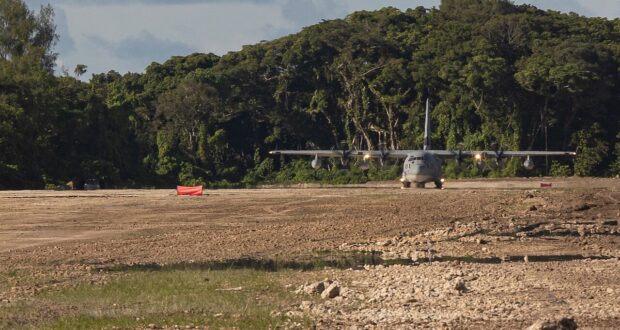
In World War II, the United States built a western Pacific airfield here, another there, and more elsewhere, each intended to bring more Japanese targets into range. Now the abundance of old bases is becoming a resource for resilience: several are being brought back into service as places to disperse aircraft and to maintain operations even as other airfields are knocked out.

Read more in ASPI’s The Strategist by clicking here.

Rowan’s book, War Plan Taiwan: OPLAN 5077 and the U.S. Struggle for the Pacific, is now available.

Image: A U.S. Marine Corps KC-130J Super Hercules aircraft with 1st Marine Air Wing, lands on a newly designated airstrip on the island of Peleliu (Source: U.S. Marine Corps photo by Lance Cpl. Hannah Hollerud)

About Rowan Allport

Dr Rowan Allport is a Deputy Director who leads the HSC's Security and Defence team. Rowan holds a PhD in Politics and a MA in Conflict, Governance and Development from the University of York, as well as a BA (Hons) in Politics, Philosophy and Economics from the University of Hull. He is also the lead author of HSC's ‘Fire and Ice: A New Maritime Strategy for NATO’s Northern Flank’ report. Rowan's publication credits include articles and commentary in Foreign Policy, The Diplomat, The Hill and DefenseOne. He has previously worked as a lobbyist for Whitehouse Communications in Westminster, and as a Senior Analyst for RAND Europe's Security, Defence and Infrastructure team. His book, 'War Plan Taiwan: OPLAN 5077 and the U.S. Struggle for the Pacific', is now available for order: https://www.usni.org/press/books/war-plan-taiwan Contact via rowanallport@gmail.com Follow on Twitter/X via @drrowanallport